






About The Manor Hotel
The Manor is an intimate and charming boutique hotel set in the tranquil village of Datchet, Windsor. The hotel overlooks the village green and the banks of the river Thames are nearby. The interiors are contemporary and have a real sense of style, while retaining much of their original, quintessentially English elegance.
Our dining venue, The Brasserie & Bar, offers an outstanding menu, using only the finest seasonal and local ingredients.
The hotel's conference and banqueting facilities comprise of six meeting/conference and private function rooms for up to 250 people.
Our unique wedding suites make this the ideal venue for weddings and civil ceremonies.
The Manor is conveniently close to the M4 and M25 and Heathrow terminal 5 is 10 minutes away, with all other Heathrow terminals a short distance further. For those guests travelling from London, Datchet train station is situated at the back of the hotel and trains run regularly from London Waterloo. Alternatively, there is a direct train to Slough from London Paddington, with Slough 10 minutes drive from the Manor.
Corporate Social Responsibility

MG Hotels recognises the importance of reducing its impact on the environment and has implemented initiatives in support of environmental improvement and sustainable development through collaboration with the bloccarbon.com company.
MG Hotels has, and continues to develop, a simple set of operational standards in the form of a sustainability commitment, which takes care to minimise impact whilst ensuring the guest experience is not compromised. With the help of bloccarbon.com it is our group intention to adopt a more coordinated approach to ensuring a sustainable future, creating a healthy environment, fair society and a sustainable economy.
The commitment has been developed in line with all company compliance tools so as to ensure it is recognised and easy to implement.
The key standards includes:
- Waste minimisation policy - through recycling initiatives
- Transport/travel policy - maximise use of public transport, promote car sharing
- Energy conservation - through replacement to low energy equipment i.e. LED bulbs, controlled thermostat heating by each individual guest.
- Energy economy measures for all departments of the hotel
- Pollution prevention measures and emergency procedures to reduce the risk of incidents and their impact, which could damage the hotel environment.
- Sustainable purchasing from our suppliers who also are committed to providing a sustainable policy and have measures and targets in place to offset their carbon footprint.
- Offsetting our CO2 emissions through investing in projects to offset our carbon i.e. planting of trees in our local communities, solar heating systems projects in developing countries.
- We are committed to reducing our carbon emission by 60% over the next 5 years.
Our commitment to policy is vital and we take our responsibility seriously. With the support and collaboration from bloccarbon.com we will regularly review and change our policy to the dynamics of the company and the environment.
If you require any further information please contact our marketing department on 01753 543442.
History
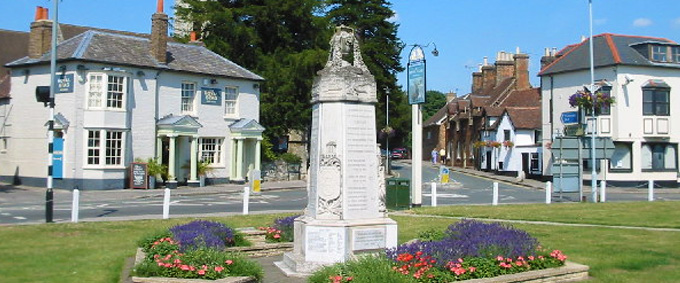
One of the landmarks of this village is the Datchet Manor. The Manor is currently used as a hotel and conference centre. The history of the Manor begins in 1335 when King Edward III gave the Manor of Datchet to William de Montacute, who then passed it on to Sir John Molins, who held it until 1631. The Manor changed hands several times until it became the property of the Duchess of Buccleuch in the 1700s.
Datchet Village
The story of Datchet starts at the end of the ice-age. Between 1000-6500 years ago there was evidence of people living in the area which was to become Datchet. They did not settle but travelled through the area. The first evidence of a settled village was in the Bronze Age.
Datchet is first mentioned between 990 and 994, when King Ethelred made small grants of land here and Datchet Manor is mentioned in the Domesday Book (1085-86). In 1150 the church already existed in Datchet and was given to the abbey of St Albans, Hertfordshire. The Abbot was rector of the parish and had the right to appoint vicars.
There was a ferry at Datchet Ferry which provided a short route from London to Windsor Castle, and was frequently used by royalty. In 1249 King Henry III gave a great oak from his Windsor forest to make a barge for passage from Windsor to Datchet.
In 1350 Edward III gave Datchet Church as part of endowment to his new church and college of St George at Windsor Castle.
In the seventeenth century traffic went to London via Horton. Horton Road began to be built up and extended by the wealthy next to the hovels of the poor. The great plague came to Datchet before and after the great plague of London. An unsubstantiated story is that King Charles II kept his mistress Nell Gwynne at Old Bridge House in Datchet.
The ferry was replaced by Datchet Bridge at the end of the High Street in 1706. The bridge was replaced three times but finally demolished in 1851 and is the only Thames bridge that has been lost.
From 1742 onwards, the Duke of Montagu and family owned Datchet. In 1790, a Workhouse was built in Holmlea Road, and in 1820, an Almshouse belonging to the workhouse was turned into a shop.
In 1848, the first train went through Datchet to Windsor and in 1860, Datchet Common's oldest beer house The Plough (now Mulligans) was in existence.
In 1886, Datchet was known as Black Datchet because a large number of bad characters lived here. This was borne out by Aylesbury County Jail having one building known as the 'Datchet Wing' filled mostly with poachers. However in 1889 Jerome K. Jerome's ‘Three Men in a Boat’ describes Datchet as a minor riverside resort. He describes both the Manor Hotel and the Royal Stag in his book.
From 1911 to 1914, cars were made at workshops at the end of Holmlea Road, Lord Montagu was the Landlord. In 1911, Sir Thomas Sopwith landed his light aircraft in Datchet eight years after the first flight in the USA by Orville Wright. His company built Sopwith bi planes.
Windsor Guards Polo grounds in Horton were where the Queen Mother Reservoir now stands. The houses opposite were built in the late 1800s to house the workers on the grounds. 140 Horton Road was an old school house.
In 1931, the Pavilion club was built on Datchet riverside. Dame Vera Lynn sang here and the 'London Set' socialised here. Edward VIII and Mrs Simpson had secret meetings here.